
The Federal Highway Administration (FHWA), the MDTA and Maryland State Highway Administration (SHA) are in constant coordination to ensure the Key Bridge Rebuild Project (Rebuild Project) is in compliance with state and federal environmental regulations. Continual collaboration with state and federal permitting agencies has occurred throughout the life of the Rebuild Project. These agencies understand the critical nature of the Rebuild Project and have demonstrated their commitment to working closely with the project team to advance permits in an expedited manner while still adhering to applicable regulations and permitting requirements.
National Environmental Policy Act
The National Environmental Policy Act (NEPA) is a federal regulation that was enacted in 1970 which requires assessments to be performed to determine potential environmental, social and economic effects of proposed federal actions to inform the decision-making process and dedication of federal resources. The definition of federal actions is broad and includes providing federal funding for projects and issuance of permits by federal agencies. Formal documentation of these evaluations must be prepared (i.e. Environmental Impact Statement, Environmental Assessment, or Categorical Exclusion) and the opportunity for public review and comment of the documentation is required.
The MDTA and SHA prepared a Categorical Exclusion (CE) for the Key Bridge Rebuild Project that was approved by FHWA, as the lead federal agency, on July 23, 2024. The FHWA-approved CE documents that the Rebuild Project will have substantial positive transportation and socioeconomic impacts by restoring a critical link in the interstate system without causing significant impacts to the community or natural and cultural resources. Specifically, the Key Bridge Rebuild Project:
- will not induce significant impacts to planned growth or land use for the area;
- will not cause any relocations of residences or businesses;
- will have no effect on travel patterns from pre-collapse conditions; and
- will not impact historic or park and recreational resources.
Additional NEPA analyses are performed and documented through preparation of re-evaluations when minor modifications to the project occur to ensure that impacts remain below thresholds of significance and to confirm the approved Categorical Exclusion remains valid.
National Historic Preservation Act
The National Historic Preservation Act (NHPA) was enacted in 1966 to govern stewardship of our nation’s cultural heritage through protection of historic, cultural and archeological resources. Section 106 of the NHPA requires federal agencies to take into consideration the effects their actions will have on these resources. State and local projects using federal funding, or requiring federal approval or permitting, are required to comply with Section 106 of the NHPA.
SHA and the MDTA initiated consultation with the Maryland Historical Trust (MHT) and consulting parties in accordance with Section 106 of the National Historic Preservation Act (NHPA) in May 2024. To accommodate for the Key Bridge Rebuild Project’s expedited schedule, SHA and MDTA executed a Programmatic Agreement (PA) with MHT and consulting parties for the undertaking on July 1, 2024. The PA memorializes SHA and the MDTA’s commitments to:
- complete the identification of historic properties,
- make an effects determination following the evaluation of historic properties within the Area of Potential Effect,
- create a process for ongoing consultation and managing changes associated with the Rebuild Project,
- develop an inadvertent discovery plan should archaeological remains be found, and
- avoid, minimize, or mitigate any adverse effects to historic properties.
MDTA and SHA continue to coordinate with MHT and consulting parties for any changes in elements of the Rebuild Project.
For more information about Section 106 consultation or the PA, please contact [email protected].
Environmental Permits and Approvals
Numerous federal and state permits and approvals are required for the Key Bridge Rebuild Project for impacts to sensitive environmental resources including, but not limited to, nontidal wetlands and their buffers, tidal open waters, forests, and areas within the Chesapeake Bay Critical Area and the 100-foot buffer. As previously mentioned, the MDTA has been continuously coordinating with state and federal regulatory agencies to obtain authorizations for project-related activities so that design and construction can progress in an expedited manner. Federal and state agencies that have issued permits and authorizations for the Key Bridge Rebuild Project include:
- US Coast Guard
The MDTA received a Bridge Permit to rebuild the Francis Scott Key Bridge carrying I-695 over the Patapsco River from the United States Coast Guard (USCG) on March 21, 2025. The proposed fixed bridge will have a horizontal clearance of 1,100 feet and a vertical clearance of 230 feet. As the design progressed and a new alignment for the bridge was needed, an amendment to the original permit was sought and received from the USCG on December 11, 2025. The amended USCG Bridge Permit can be viewed here. - US Army Corps of Engineers
- National Oceanic and Atmospheric Administration Fisheries Service
- Maryland Board of Public Works
- Maryland Department of the Environment
- Chesapeake Bay Critical Area Commission
- Maryland Department of Natural Resources Forest Service
Permits have been received for conducting geotechnical investigations, demolition activities, installation of temporary trestles, and construction of the new bridge structure. Coordination with federal and state regulatory agencies is ongoing and requests for modifications to existing permits and approvals are submitted as needed to account for any changes in impacts to regulated resources.
Mitigation for Impacts and Environmental Stewardship
Federal and state regulations require mitigation for unavoidable permanent impacts to environmental resources. The MDTA has worked extensively with resource agencies to identify appropriate mitigation to offset impacts associated with the Key Bridge Rebuild Project. The MDTA has also committed to performing environmental stewardship activities that exceed mitigation required by federal and state regulations.
The MDTA is providing mitigation for unavoidable impacts to nontidal wetlands and streams is being provided in accordance with the Environmental Protection Agency’s 2008 Compensatory Mitigation Rule. A Compensatory Mitigation Plan has been prepared and approved by the US Army Corps of Engineers and the Maryland Department of the Environment. Nontidal wetland mitigation is being met through use of an approved mitigation site previously constructed by the MDTA along Jones Falls in Baltimore County. Jones Falls discharges to Baltimore Harbor and as such provides a direct benefit to water quality of Baltimore Harbor. Compensatory mitigation for stream impacts is being met through purchase of credits from a USACE-approved mitigation bank
The MDTA is partnering with a local non-profit organization to remove derelict crab pots in the Patapsco River to offset impacts to tidal open waters associated with the Rebuild Project. Derelict crab pots pose risks to boaters, trap and kill marine life, and interfere with active crabbing operations. The program will employ local watermen who bring invaluable expertise and knowledge of the river. Using maps of targeted locations, along with their own vessels and specialized equipment like grappling hooks, watermen will retrieve the debris, which will benefit both the aquatic environment and waterway users alike.
Clearing Derelict Crab Traps from the Bay – Oyster Recovery Partnership
Creation of new oyster reefs within the Fort Carroll Oyster Sanctuary are planned as an environmental stewardship activity. Oysters improve water quality through filtration and oyster reefs provide valuable habitat for numerous aquatic species. Baseline surveys are being conducted to delineate the extents of existing oyster reefs within the sanctuary and identify areas suitable for the establishment of a new reef. The MDTA is partnering with a local non-profit organization to create a three-acre oyster reef. This includes placement of hard substrates, which could include concrete repurposed from demolition activities, on the bed of the Patapsco River and seeding the area with spat over a two-year period.
Baltimore Harbor Oyster Sanctuary Now Accepting New Tenants – Chesapeake Bay Foundation
A Memorandum of Understanding (MOU) was executed between the MDTA and Maryland’s Chesapeake Bay Critical Area Commission in September 2024. Through the MOU, the MDTA has committed to maximizing replanting of vegetation and providing stormwater management for new impervious surfaces within the footprint of the Rebuild Project that occurs within the Chesapeake Bay Critical Area. As design progresses, areas for planting are being identified and evaluated for suitability to meet mitigation requirements. Mitigation that cannot be achieved through planting on-site will be met through fee-in-lieu payments on a square footage basis to Baltimore City and Baltimore County.
The MDTA is coordinating with Maryland Department of Natural Resources’ Forest Service (MDNR Forest Service) for impacts to forest resources outside of the Chesapeake Bay Critical Area. The MDTA has committed to fulfill mitigation required to offset impacts to forest resources within the footprint of the Rebuild Project and within the MDTA right-of-way adjacent to the project area. A Reforestation Plan has been submitted to MDNR Forest Service that demonstrates that mitigation requirements can be met within these areas.
Monitoring for Compliance
Federal and state permits require monitoring and reporting to demonstrate compliance with permit conditions. The MDTA and Kiewit environmental compliance teams areis actively monitoring water quality parameters adjacent to construction activities, and underwater noise generated by pile driving, dust allayment, spill prevention and control measures, and sediment and erosion controls on land, among many other elements. An Independent Environmental Monitor, which is independent from the MDTA’s environmental compliance team and Kiewit’s environmental compliance team, serves as the eyes and ears of the regulatory agencies and, will be on-site throughout the duration of the Rebuild Project to ensure all permit conditions and additional environmental commitments made by the MDTA are fulfilled.
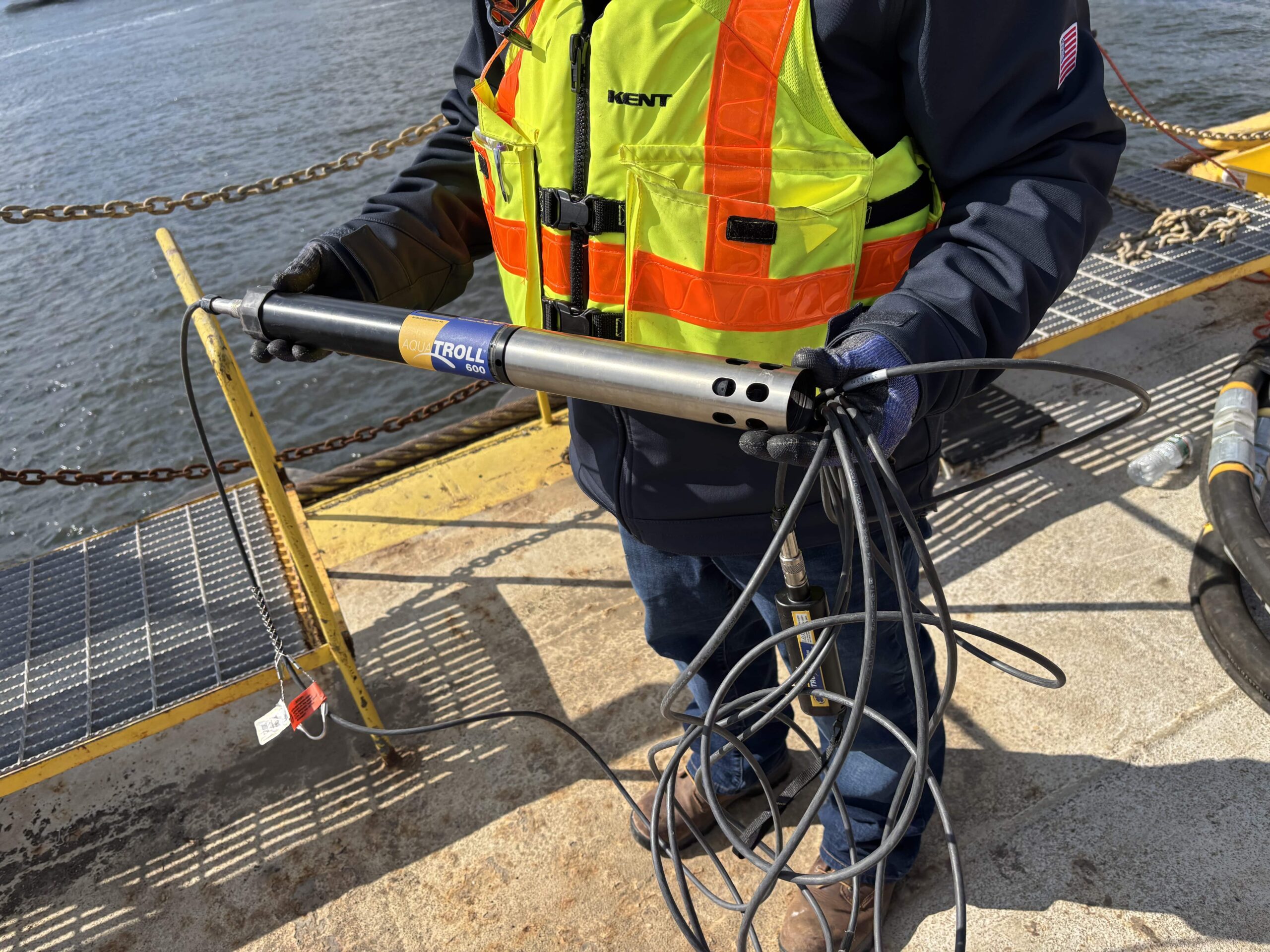
Instrumentation has been deployed in the Patapsco River to adjacent to areas of active construction monitor water quality. Water quality monitoring stations were installed prior to construction activities to establish baseline conditions for water quality parameters including turbidity, salinity, temperature, dissolved oxygen, and pH. Handheld meters and meters attached to buoys are also utilized by construction personnel to monitor water quality parameters adjacent to active work areas. Recorded data is provided to regulatory agencies on a regular basis to demonstrate compliance with established water quality standards for this segment of the Patapsco River.
To prevent debris from entering the water during demolition of the existing structures, custom built barges were placed under the remaining structures of the original bridge. These barges were strategically positioned to catch any small amounts of debris that fell as crews removed sections of the bridge from above. The barges were specially outfitted for this task, including a thick layer of sand on their decks so that debris sank into the sand rather than bouncing off of the steel deck surface and into the river.
Underwater Noise Monitoring
Construction activities such as pile driving have the potential to generate underwater noise at levels that are harmful to fish and other aquatic species. Hydroacoustic engineers deploy instrumentation at prescribed distances from active pile driving operations to collect data in order to determine distances to which impacts could cause behavioral modification or injury of fish. Innovative technologies, such as use of bubble curtains (see Innovative Technologies tab below), are deployed around piles being driven to dampen the underwater noise and minimize impacts of these activities on the aquatic environment. Areas surrounding pile driving operations are actively monitored to collect, record, and document any fish that have been impacted by construction related activities. Monetary compensation is provided to MDNR Fisheries Service according to number, species, and size of fish species impacted.
In addition to requiring implementation of industry standard Best Management Practices, The MDTA is collaborating with the construction team to identify innovative technologies that can be used to minimize impacts to sensitive environmental resources during the Rebuild Project.
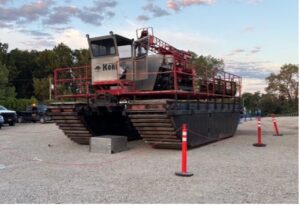
Swamp Buggy
To reduce environmental impacts during geotechnical exploration in wetland, the Rebuild Project is utilizing a swamp buggy. This amphibious vehicle is designed to operate in both aquatic and terrestrial environments, making it ideal for navigating the challenging terrain of swamps and wetlands. The swamp buggy uses buoyant pontoons on wide tracks instead of wheels to evenly distribute weight and prevent sinking while collecting important data to support the design. Utilizing this type of equipment facilitates data collection activities in an environmentally responsible manner.
Bubble Curtains
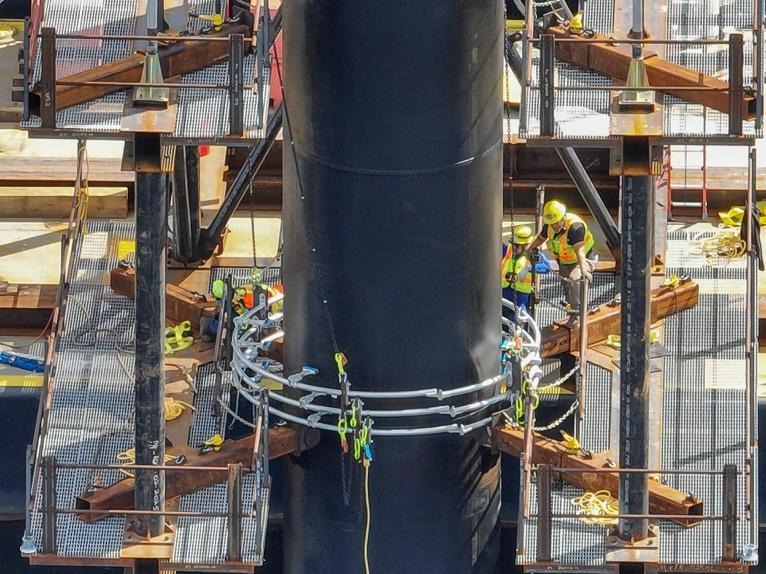
Federal and state permits issued for the project require the use of a bubble curtain during pile driving. The bubble curtain is a system containing three rings spaced ten feet apart and are perforated with tiny holes. Compressed air from multiple large air compressors on a nearby barge is pumped through the rings, generating millions of bubbles which significantly reduces the underwater noise from pile driving . Underwater noise monitors are placed at multiple locations to ensure the bubble curtain is working properly.

Monitoring
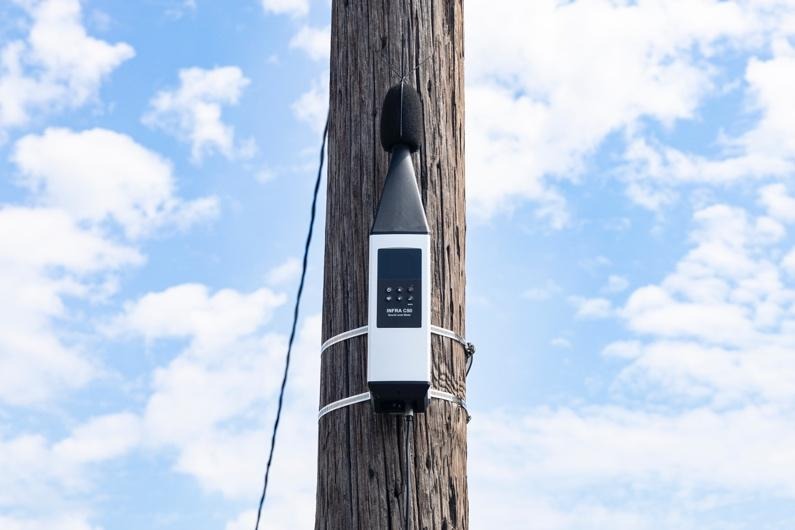
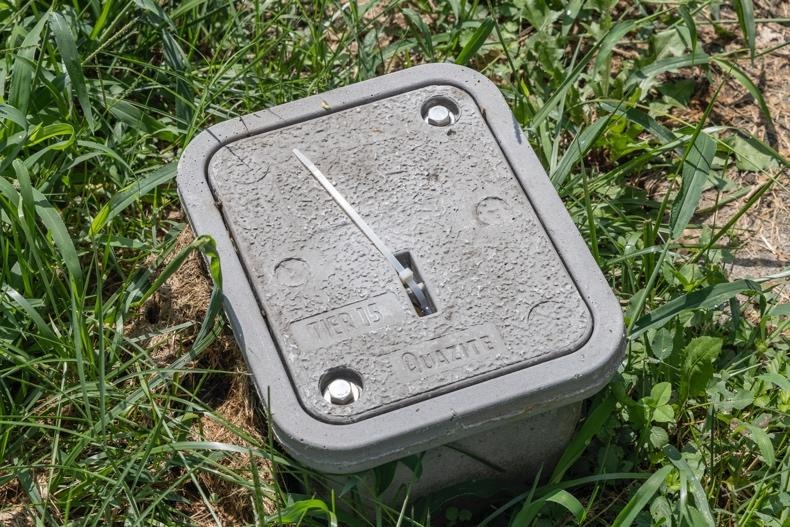
Demolition of the existing bridge structures and construction of the new bridge utilizes heavy machinery which may generate some noise and vibration within the project area. The MDTA understands the concerns of those living and working adjacent to the project area regarding noise and vibration and are making every effort to limit impacts. Noise and vibration monitors were placed around the project area to collect baseline data and are currently monitored in real-time for noise and vibration levels associated with demolition and construction activities.
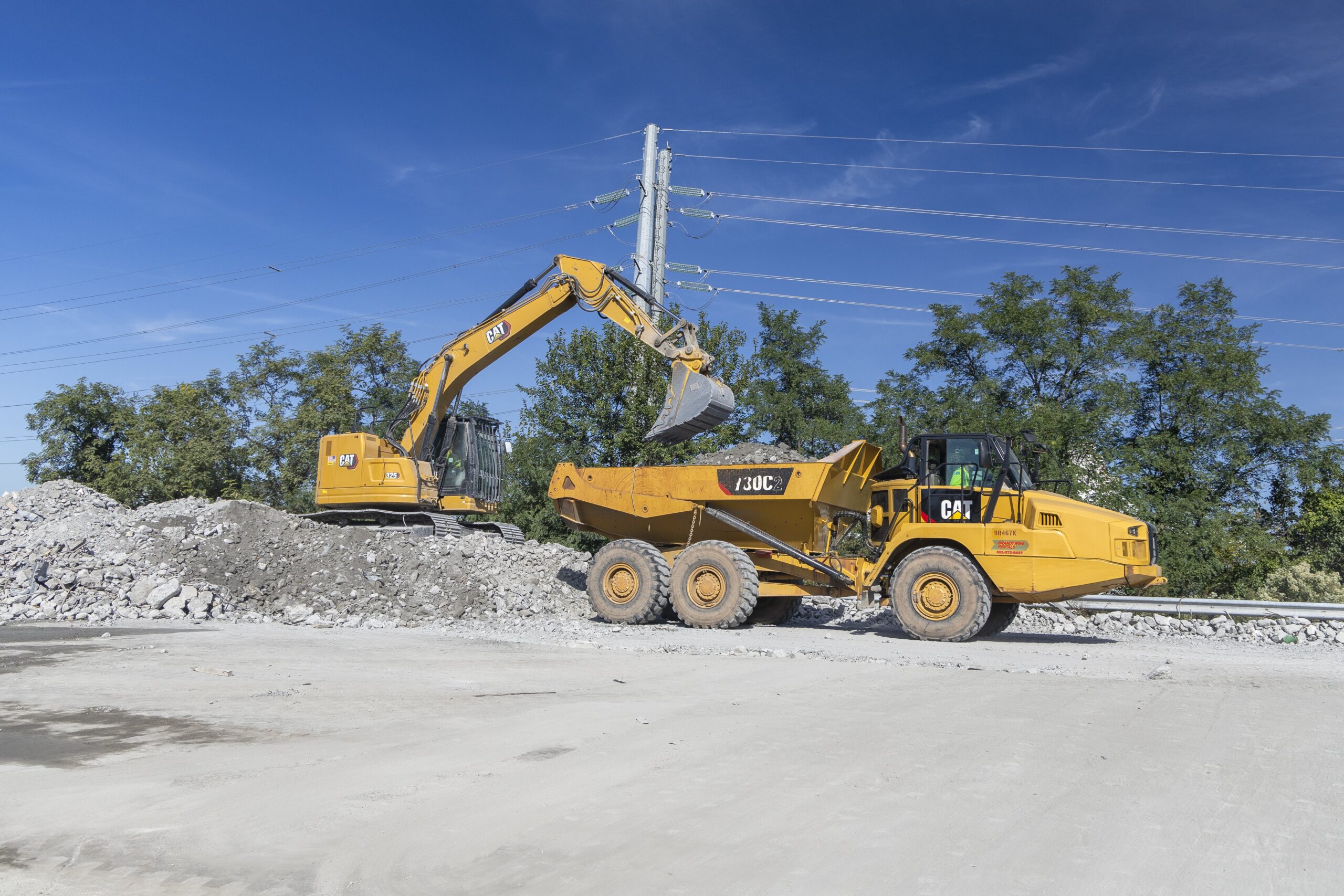
Concrete from the old bridge decking and median barriers were removed in sections for further processing. Some of the concrete will be reused on site in support of construction activities while the remainder will be taken off-site for recycling and reuse elsewhere. Recycling of concrete is a sustainable practice that has benefits that extend beyond the Rebuild Project.
Environment Related FAQ
While the demolition and rebuild process may have some impact, as noted above, the Federal Highway Administration (FHWA) determined that the replacement Key Bridge will have limited environmental impacts, as it stays within the MDTA’s right-of-way and maintains the same four-lane capacity.
- Environmental and Permitting Efforts: Coordinated with Federal and State partners to obtain all necessary permits
- Geotechnical Investigation: Extensive water-based borings of the Patapsco riverbed and land-based boring along the bridge alignment were completed to assess soil conditions and identify potential subsurface obstructions.
- Survey and Mapping: Collection of topographic data, right-of-way boundaries, and subsurface utility mapping to support detailed construction planning.
- Property Inspections: Completed 1121 property inspections and documentation to establish baseline conditions ahead of major construction activities.
- Noise and Vibration Monitoring: Installation of monitoring equipment in surrounding communities to capture baseline noise and vibration data prior to the start of test piles and full construction.
- Wind Tunnel Testing: Modeling real-world wind conditions to study the structures response in order to fine-tune the design.
- Scour Testing: Modeling how water moves around the foundation and piles to understand impacts to the riverbed.
Sign Up for Alerts
I would like to opt-in to receive project related emails and/or text messages from the Key Bridge Rebuild team.